Plastic Cosmologies: Radical Permeation and the Self, Hakubi Center for Advanced Research, Kyoto University 2025-present
Materially distinctive in the ways that they transform daily life and behave as pollution, plastics require new forms of engagement. Plastics enter contemporary life on many scales, from the dramatic journeys of ocean plastics, to the more mundane arrival of a shipping container or a grocery truck. Once present, plastics play many roles, both intended and accidental. They now form such a key part of the scaffolding of contemporary life that they can be difficult to even notice. To encounter a material so common that it has become largely invisible, this project will utilize ethnographic methods to denaturalize the presence and influence of plastics. Beginning with research on Christmas Island, an Australian external territory whose beaches are inundated with plastics, this multi-sited ethnography will later turn its attention to Japan, looking at the use of plastics, as well as religious and scientific understandings.

The project Being, Uncanny engages the insistent materiality of plastics as they interact with and co-constitute cultural, ecological, and religious spheres. As we are increasingly coming to recognise, plastics and their attendant chemical retinues bridge the distance between creation and being, infiltrating and influencing our hormonal systems, bodies, and the experience of being human. In this context the study of heritage takes on a deeply intimate role as the study of the industrial and synthetic materials we have made that now, in turn, make or unmake us.
This project looks at how Buddhists see themselves in relation to the technologies and economies that plastics have co-produced. By looking at how Buddhists reject, venerate, and are flooded with plastic items, Always Already Entwined/Impure investigates how Buddhists view their separation and/or integration in a world awash with plastics. Engaging the deep ambivalences that many Australian Buddhists have towards plastics, it will explore how the ubiquitous presence and deathless materiality of plastics both support and disrupt Buddhist engagements with contemporary forms of consumer capitalism.
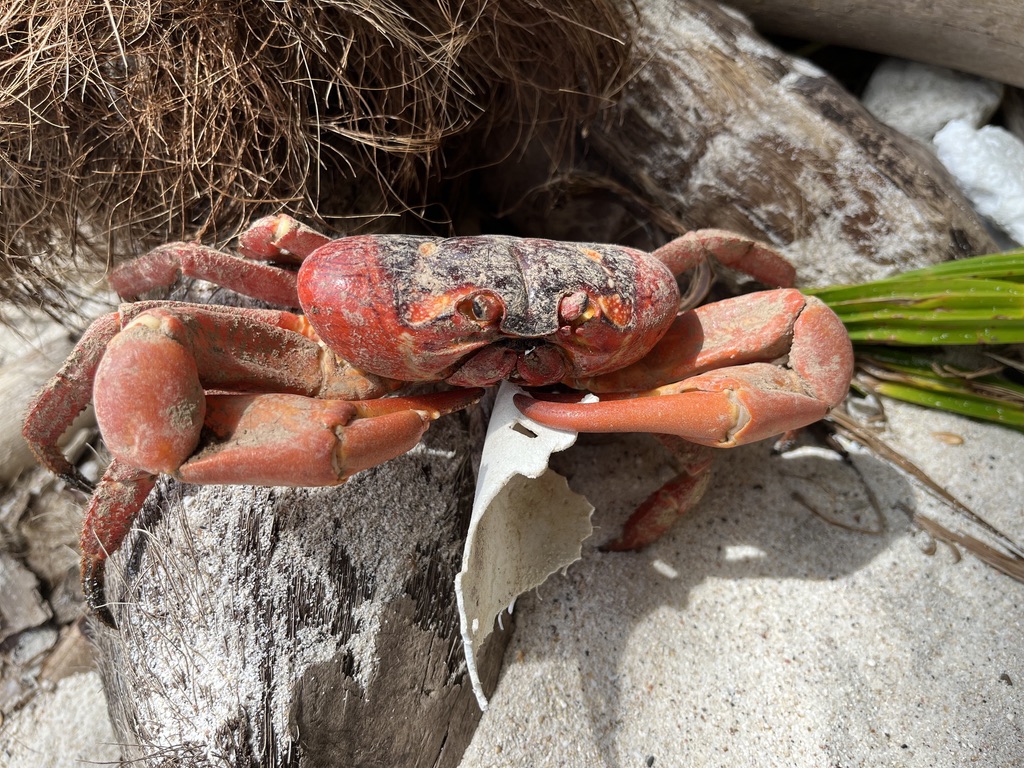
This research project explored how people on Christmas Island, an Australian external territory in the Indian Ocean, understand the inundation of plastic materials on their beaches and the ubiquity of plastic usage in their lives. While the island’s human inhabitants depend on imported packaged food that comes wrapped in plastic and in plastic-lined tins, its wildlife is disrupted by the inundation of plastics on beaches.
Impermanent – Imperishable: Plastics and Praxis among Buddhists in Oceania, funded by the Velux Foundation as part of the WASTE project at the Centre for Contemporary Buddhist Studies, Department of Cross-Cultural and Regional Studies, University of Copenhagen, 2022 – 2024.

This research project looked at how Buddhists in Oceania relate to radical permeability and toxicity amidst the changing ecosystems on the planet. How do Buddhist practices which enhance the awareness of the permeability of the human body incorporate, challenge and/or reject how Buddhists relate to the presence of plastics in the Anthropocene?
Residue: Mongolian Buddhist Waste and the Recalcitrant Materiality of Blessings, Marie Skłodowska-Curie Fellow at the Centre for Contemporary Buddhist Studies, Department of Cross-Cultural and Regional Studies, University of Copenhagen, 2020-2022.

Although Buddhism is often considered to be a religion defined by its explicit counsel against excessive desire and consumption, this research will highlight the ways that Buddhist ritual practices generate consumption, excess, and waste. This project followed Buddhist ritual items from their point of purchase to their ‘productive afterlives’ as discarded things. Rather than seeing the generation of waste as incidental to Buddhist practice, it demonstrated how Buddhist consumption and waste-making practices are key to understanding contemporary Buddhism. By exploring the seeming non-sequitur of ‘Buddhist waste’, it provided new insights into the cultural aspects of the generation and conception of waste.
Materializing Prosperity: Doubt, Potency and Economic Prosperity in Ulaanbaatar, The Institute for Advanced Studies in the Humanities, The University of Edinburgh, 2020.
My writing project for the IASH-SSPS asked how attempts to alter one’s economic fortunes through religious rituals influence broader economic behaviours and attitudes in Ulaanbaatar. As many urban Mongolians try to mitigate economic problems through ritual practices, this project traced the relationship between religious practices and economic inequalities. It looked at how, in the context of an unstable economy, objects believed to influence a household’s wealth can become ambiguous and immaterial cosmological causalities can become immanent.

Intangible Causes, Ambiguous Materials: Constellated Cosmologies of Urban Inequalities, Max-Weber-Kolleg, The University of Erfurt, 2019-2020
The project followed the social life of things and processes that are thought to influence economic inequality, and how these things or causalities, whether initially material or immaterial, instantiate themselves in the lives of Ulaanbaatar’s residents.
Shrouded Fortunes: Materiality, Religion and Doubt, New York University, Shanghai 2017-2019
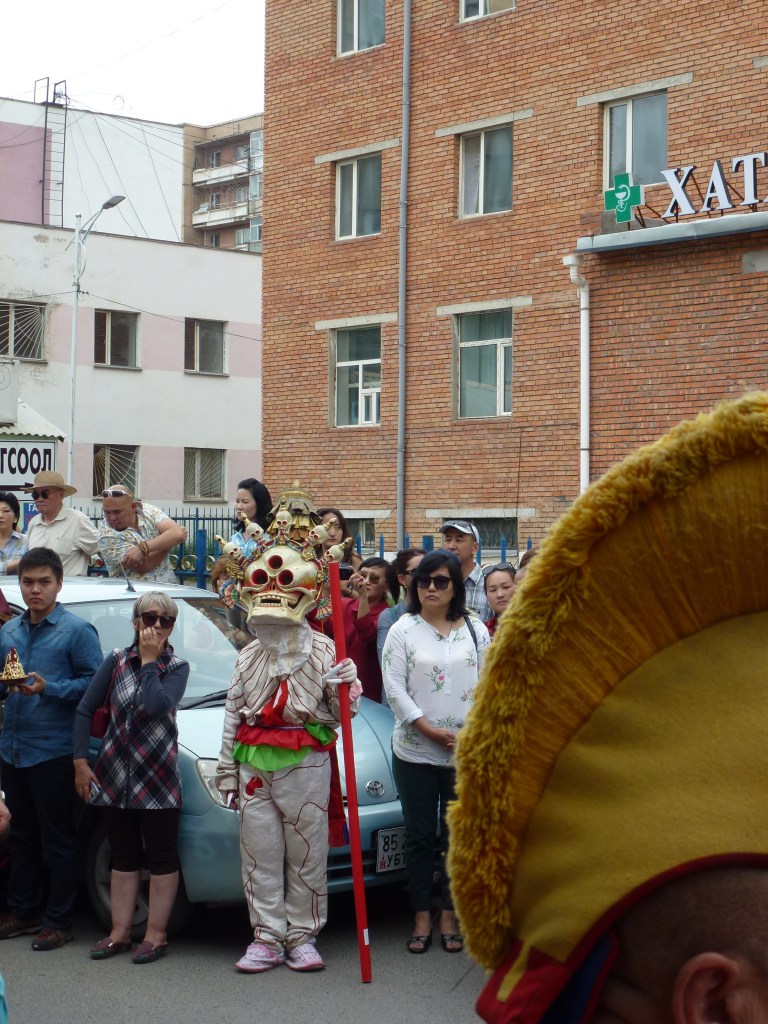
This project looked at the materiality of air pollution in relation to postsocialist religious experiences, as it is generative of uncertainties and certainties, knowledge and ignorance, security and anxiety, clarity and blur. The project also explored money in its material instantiations and its divergent interpretations. This project discoursed with more general theoretical debates about global economic, environmental and political changes within anthropology, sociology and beyond, adding to the emerging field of anthropologists and sociologists who are directly engaging with global capitalism as an evolving set of practices, values and structures.
New Buddhist Economies in Mongolia: Accrual, Dispersal and the Vicissitudes of Wealth, Postdoctoral Research Project working within the group ‘Buddhist Temple Economies in Urban Asia’ at the Max Planck Institute for Social Anthropology 2014-2017.

This project investigated the formation of new Buddhist economies following the end of the socialist period. This research explored how changing attitudes to money impact donations to Buddhist institutions, and how these institutions address growing concerns about inequality. Based on previous research about the spiritual value of money in Mongolia, the project explored the strategies that Mongolians use to navigate mundane and supra-mundane religious economies. It looked at how ritual activities incorporate or sideline financial imperatives and money. And, how money itself is perceived as living or inert, generative or depletive, polluted, corrupted, blessed or neutral.
Improvising Tradition: Lay Buddhist Experiences in Cosmopolitan Ulaanbaatar, Department of Anthropology and Sociology, The University of Western Australia 2007-2012
Judgements, Goose Strings and Visceral Stirrings: Combining Objects and Feelings in Theories of Emotions, History and Philosophy of Science, The University of Melbourne 2005
Depression and the Narratives of Suffering: A Look At Pathways of Dysphoria, Department of Anthropology, The University of Western Australia 2002
 Saskia Abrahms-Kavunenko